Elevated Challenges: Altitude and Weather Patterns Reshaping Football Outcomes and Tennis Betting Strategies

Altitude and climate variations create measurable effects on athletic performance across multiple sports, with football providing some of the clearest data points because matches often occur at extreme elevations, while tennis strategies incorporate similar environmental considerations when bettors analyze player endurance and recovery rates. Researchers have documented oxygen availability dropping roughly 10 percent for every 1,000 meters gained in elevation, which forces football teams to adjust tactics and conditioning programs well before kickoff.
Teams traveling to venues such as Estadio Hernando Siles in La Paz routinely arrive days early to acclimatize, because historical match records show home sides maintaining possession advantages that increase by double-digit percentages when visitors lack adequate preparation time. Climate factors compound these challenges, since heat and humidity accelerate fatigue through elevated core temperatures, whereas cold and wind alter ball trajectory and passing accuracy in ways that directly influence goal-scoring rates.
Altitude Impacts on Football Match Dynamics
High-altitude stadiums produce consistent patterns visible in both domestic leagues and international competitions. Bolivian clubs competing in Copa Libertadores have recorded victory margins that widen notably above 2,500 meters, according to performance metrics compiled across multiple seasons. Visiting squads experience reduced sprint distances and slower recovery between high-intensity efforts, prompting coaches to shift toward shorter passing sequences and more conservative defensive structures rather than pressing schemes that demand sustained aerobic output.
Data collected through May 2026 from CONMEBOL fixtures illustrates how these adjustments translate into fewer shots on target for non-acclimatized sides, while set-piece efficiency sometimes rises because reduced air density allows longer throws and higher trajectory on crosses. Medical staff now track blood oxygen saturation levels in real time during warm-ups, enabling substitutions timed to preserve key players when conditions exceed individual tolerance thresholds.
Climate Variations and Tactical Adjustments in Football
Temperature swings and precipitation levels further modify match scripts in lower-elevation venues. Summer fixtures in regions experiencing prolonged heatwaves show declining work rates after the 60-minute mark, with midfielders covering fewer kilometers according to GPS tracking systems used by professional clubs. Rain-soaked pitches slow ball speed and increase error rates on through balls, which shifts betting markets toward under totals in leagues where weather reports forecast heavy downpours.
Coaches respond by emphasizing ground-based combinations and quick transitions before surfaces become unplayable, while analysts incorporate historical weather-adjusted performance data when projecting expected goals. These layered environmental influences create opportunities for predictive modeling that accounts for venue-specific climate normals rather than relying solely on recent form.
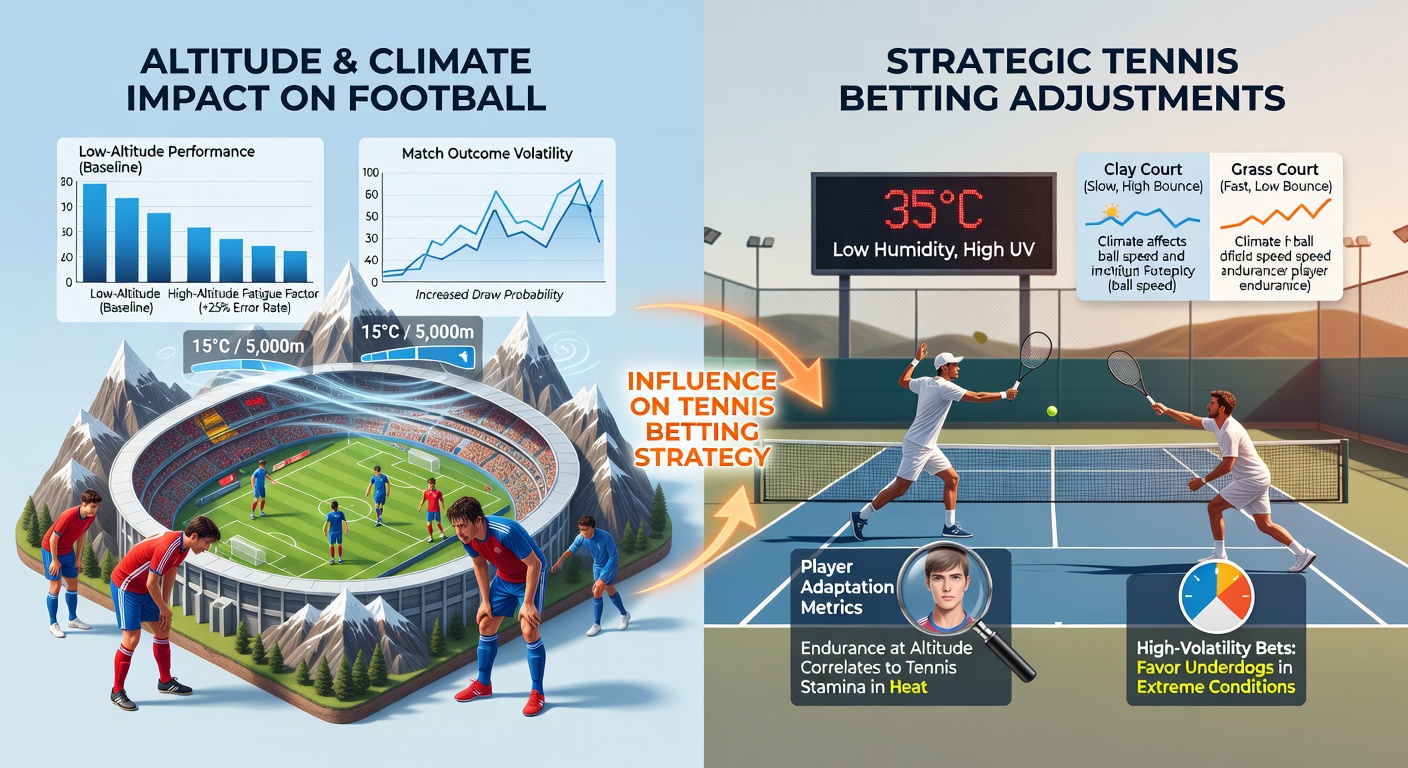
Connecting Environmental Factors to Tennis Performance Metrics
Tennis tournaments held at varying elevations and under diverse climate conditions display parallel performance shifts that bettors monitor when constructing match predictions. Venues such as the Intermountain West in the United States host events where thinner air allows serves to maintain higher speeds with less resistance, producing ace percentages that exceed season averages for the same players. Heat indices above 32 degrees Celsius correlate with increased double-fault rates late in matches because recovery intervals between points prove insufficient for full physiological restoration.
Studies from sports science departments at universities across North America and Australia have quantified how humidity levels above 70 percent extend rally durations yet reduce overall point-winning percentages on second serves. Bettors who integrate these variables into pre-match evaluations gain edges when comparing surface-specific statistics that ignore environmental context.
Strategic Tennis Betting Approaches Informed by Football Insights
Market participants increasingly apply football-derived acclimatization models when assessing tennis draws scheduled across altitude gradients or during seasonal climate transitions. Players with documented success at high-elevation events such as the ATP tournament in Bogota demonstrate measurable edges in best-of-three sets, particularly when opponents arrive without prior exposure. Climate forecasts released by meteorological agencies in different hemispheres help refine live betting thresholds, since sudden temperature drops during evening sessions alter movement patterns and favor baseline grinders over aggressive net rushers.
Statistical platforms now aggregate historical serve percentages adjusted for dew point and barometric pressure, allowing sharper identification of value in over/under games markets. Observers note that these cross-sport analytical frameworks gain additional relevance during periods when multiple Grand Slams and international football qualifiers occur within the same calendar window, because shared recovery science informs both disciplines.
Conclusion
Altitude and climate variations produce quantifiable influences on football match outcomes through altered physiological responses and tactical adaptations, while the same environmental data sets support refined modeling for tennis betting markets. Continued collection of venue-specific metrics through 2026 and beyond enables more precise projections that account for these external variables rather than treating them as random noise.